
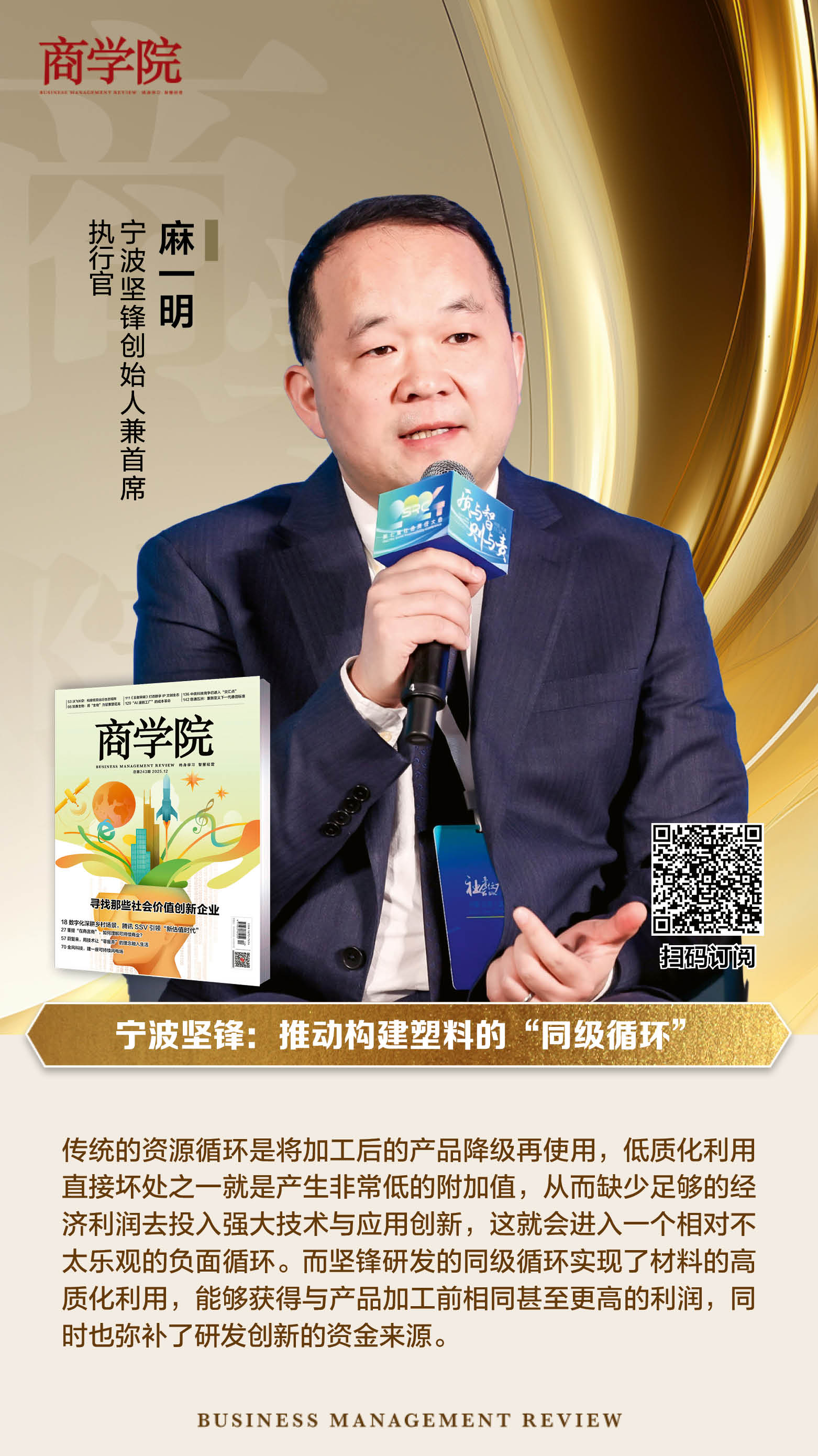
Traditional resource recycling involves downgrading processed products for secondary use. A direct drawback of such low-value utilization is the generation of meager added value, which results in insufficient economic profits to invest in advanced technology and application innovation. This traps the industry in a rather unfavorable vicious cycle. In contrast, Topcentral’s independently developed upcycling loop achieves high-value utilization of materials, yielding profits equivalent to or even higher than those generated before product processing, while also securing a sustainable funding source for R&D and innovation.
Ningbo Topcentral: Forging an Upcycling Ecosystem for Plastics
Plastics are ubiquitous in modern society, from daily food packaging in supermarkets and raw materials for auto parts to electronic appliances and medical devices. They have become an indispensable foundational material supporting the global industrial system.
According to the Global Plastic Outlook Report 2022 released by the Organisation for Economic Co-operation and Development (OECD), the global annual plastic output has exceeded 400 million tons. The Global and China Plastic Products Industry Technology and Market Analysis Report indicates that as the world’s largest producer and consumer of plastic products, China’s output exceeded 85 million tons in 2024, accounting for 32% of the global total, with its domestic market scale reaching RMB 380 billion.
Derived primarily from petroleum, plastics offer advantages such as light weight, durability, high plasticity, and low cost. They play a vital role in ensuring product safety and extending shelf life. However, plastic manufacturing relies heavily on fossil fuels, and its production processes account for approximately 3%–4% of global carbon emissions, making it a veritable “major carbon emitter”. Worse still, over 90% of plastics fail to be recycled effectively. After use, they are either landfilled, where they take centuries to decompose; incinerated, releasing greenhouse gases like carbon dioxide; or discarded directly into the natural environment, breaking down into microplastics that cause persistent pollution to soil, water bodies, and ecosystems.
Even when recycled, most plastics undergo a downgrading loop. Due to imprecise cleaning and sorting technologies and backward regeneration processes, the performance of recycled plastics deteriorates significantly, restricting their use to low-end product manufacturing. This recycling model leads to enormous resource waste and fails to form a sustainable economic closed loop for plastic circulation.
To address these pressing issues, Ningbo Topcentral Advanced Materials Co., Ltd. (hereinafter referred to as “Ningbo Topcentral”), a technology-driven advanced materials enterprise, has leveraged its innovative “upcycling loop” technology to convert post-consumer plastic waste into core materials for new products, achieving high-value recycling and regeneration of plastics. Recently, Business School magazine interviewed Ma Yiming, Founder and CEO of Ningbo Topcentral, to delve into the company’s unique plastic recycling model.
Committed to the Cause of Plastic Recycling
Through its upcycling loop technology, Topcentral transforms plastic waste into high-performance recyclable materials. Its industrial practices have proven that the circular economy is not merely an environmental concept but also a sustainable development model capable of creating commercial value.
Ma Yiming founded Ningbo Topcentral Advanced Materials Co., Ltd. in Fenghua District, Ningbo City, Zhejiang Province in December 2019. Prior to establishing Topcentral, he had amassed extensive experience in the materials sector.
Equipped with a master’s degree in chemical engineering from Zhejiang University, a DBA qualification, and rich enterprise management experience, Ma Yiming also actively participates in the formulation of national industry standards. He has presided over projects funded by the Ningbo Natural Science Foundation, participated in national key R&D programs and provincial-level scientific and technological projects, published 6 SCI papers in related fields, and filed multiple invention patents. Ma Yiming has brought this innovative spirit to Topcentral’s management. He leads a young team dominated by post-85s professionals with an average age of only 33 years old, steering Topcentral to focus on plastic circular economy and carbon neutrality technologies, and striving to build a green, circular, and carbon-neutral global ecosystem through sustainable technological innovation.
For example, Topcentral’s PCR Nylon 6 (Nairong® rPA6), developed from waste materials such as discarded fishing nets, is produced through a series of sophisticated processes including recycling, pre-treatment, standardized pelletizing, and modification. The production of each ton of Nairong® rPA6 reduces carbon dioxide emissions by over 91.3%, significantly alleviating reliance on petroleum resources and environmental pressure. This material is widely used in manufacturing products like outdoor tents.
In addition to outdoor tents, a variety of colorful plastic stools, household appliances, and storage boxes are also application scenarios for Topcentral’s recycled plastics. Ma Yiming noted that the traditional plastic recycling industry is highly fragmented, multi-category, low-tech, and saturated, hindering intensive recycling and necessitating diversified collection methods. Historically, most recycling and processing enterprises have been small-scale operations, lacking the human, material, and financial resources to invest in R&D and innovation.
Thus, he concluded that the current plastic recycling industry is in its infancy, with primary-stage resource aggregation, talent pools, technologies, capital, and environmental regulations. This emerging sector boasts enormous potential for sustainable industrial upgrading, representing a vast blue ocean market.
On the other hand, Ma Yiming told reporters that Earth’s resources are finite, especially petroleum and underground resources. Therefore, efficient resource extraction and extending the service life of resource materials are particularly crucial. Secondly, as global temperatures rise due to intensifying greenhouse effects, reducing carbon dioxide emissions and realizing resource recycling have become imminent priorities.
Currently, Topcentral has established four core technology systems—Taosu®, Bida®, Baidekang®, and Kaisa®—focused on achieving plastic upcycling loops. Through independently developed cutting-edge processes such as deep purification and molecular repair, the company converts post-consumer plastic waste into high-quality materials that match or even surpass the performance of virgin products, enabling their reuse in high-end applications such as automotive, electronics, and home appliances.
Specifically:
- Taosu® focuses on physical recycling technologies, emphasizing the processing and direct application of plastic waste. It converts post-consumer plastics (e.g., Wahaha water buckets, marine plastic bottles) into recycled pellets through processes like melt pelletizing, achieving a bottle-to-bottle upcycling loop.
- Bida® is a plastic modification technology that enhances the performance of recycled materials by adding compatibilizers and toughening agents, enabling marine recycled plastics to meet the heat resistance and strength requirements for automotive component production.
- Baidekang® emphasizes raw material substitution technology, focusing on breaking through traditional petroleum-based routes. Its core lies in bio-based and biodegradable materials derived from straw, seaweed, etc., providing green alternatives for industries such as food packaging.
- Kaisa® adopts chemical recycling technology, depolymerizing waste PET textiles and engineering plastics into monomers through molecular-level regeneration processes such as alcoholysis and hydrolysis. These monomers are then refined and repolymerized to produce new materials that meet optical-grade standards, suitable for high-end fields like display screen light guide plates.
These four technology systems cover physical recycling, performance enhancement, raw material substitution, and molecular-level regeneration, constructing a complete plastic recycling industrial chain and realizing the transformation of low-value waste into high-value new materials.
Opening the Data Black Box to Reduce Carbon Emissions for the Industry
Through independently developed deep purification and molecular repair technologies, Topcentral has comprehensively outperformed traditional recycling methods in terms of material performance, purity, and application level.
Topcentral’s plastic upcycling model starts with the recycling of plastic waste and ends with the production of recycled plastic products. Throughout this process, Topcentral’s “Beisu®” traceability chain system monitors and records the entire process, ensuring the transparency and credibility of the carbon footprint of each batch of materials.
Starting from the delivery of marine plastic waste, the platform binds a unique identity to each batch of materials via a dedicated product digital passport (CarbonID) QR code or RFID tag, and real-time records initial data such as recycling time, location, type, and weight. Front-end users (e.g., fishermen, residents) who participate in recycling can automatically earn and redeem carbon credits on the blockchain based on the data of the plastic waste they submit. In the logistics and processing stages, IoT devices continuously and automatically collect key node data, with GPS tracking transportation routes. During production, sensors connected to the production line record process parameters in real time, such as crushing energy consumption, cleaning water temperature, and pelletizing temperature, which are dynamically linked to the digital twin materials on the blockchain to ensure data accuracy and uniqueness. In the core carbon footprint accounting stage, the platform’s built-in LCA (Life Cycle Assessment) model automatically calculates the precise carbon footprint of each batch of products based on collected real-time energy consumption data, material balance data, and transportation mileage, generating accounting reports that comply with international standards. Finally, in terms of value realization, downstream customers cooperating with Topcentral can authorize digital interfaces to obtain supply chain carbon emission data and certification reports that meet EU CBAM requirements. The operation mechanism of the “Beisu®” blockchain traceability platform completely resolves the data black box problem in the recycling industry, building a circular ecosystem driven by data and shared value.
For instance, at the “Ocean Partner” Environmental Protection Cabin in Qifeng Village, Chunhu Street, Fenghua, Zhejiang, when fishermen deliver marine plastic waste such as damaged fishing nets and baskets to the intelligent recycling cabin, the “Beisu®” platform instantly records the source data of each delivery via IoT devices, including the weight, type, and time of the recycled materials, as well as the fishermen’s identity information, and generates a unique QR code for the batch. This mixed marine plastic waste is then precisely sorted in subsequent factory processing—for example, separating waste PE fishing baskets from PP buoys. During each stage of purification, pelletizing, and modification into high-performance recycled plastic pellets, the “Beisu®” platform automatically collects and records key process parameters through connected devices, such as energy consumption of the cleaning line, pelletizing temperature, and modification formula data.
Ultimately, when these recycled pellets derived from marine waste are purchased by downstream manufacturers and used to produce a fashionable T-shirt, consumers only need to scan the “Beisu®” QR code digital product passport (CarbonID) on the product tag to clearly trace its complete lifecycle: from being recycled as fishing nets in which fishing village, to how much energy was saved and carbon emissions reduced during the regeneration process, and finally to its transformation into the product in hand—all supported by real data and image materials.
Ma Yiming cited another example: As a leading enterprise in China’s bottled water market, Wahaha generates millions of post-consumer waste polycarbonate (PC) water buckets every year. Topcentral conducts large-scale recycling of these buckets, converting them into high-performance carbon-neutral green polycarbonate (FreeCBO2® Pulici® rPC) products through a series of patented processes including precise sorting, deep cleaning, melt pelletizing, and modification reinforcement. The product’s performance and environmental indicators have reached the international advanced level of recycled PC materials. The recycling process has reduced carbon emissions by over 1,000 tons, equivalent to planting 100,000 trees.
Regarding FreeCBO2® Pulici® rPC, this carbon-neutral product, Ma Yiming told reporters that Topcentral achieves carbon neutrality mainly through two approaches. First, it replaces traditional power energy entirely with green renewable energy, which has been verified by third-party certification audits. Second, it offsets carbon footprints by purchasing green electricity or carbon forest sink certificates, also certified by third-party audits. On the process side, Topcentral has innovatively developed molecular-level purification processes including high-efficiency cleaning and high-precision filtration systems. Combined with an AI-controlled intelligent temperature control system, it optimizes heat exchange and monitors energy consumption in real time, reducing the unit product energy consumption in the melt pelletizing process by 12%. On the accounting side, Topcentral has established an accurate carbon footprint accounting model based on the life cycle assessment method, using the “Beisu®” platform to track and record carbon emissions throughout the entire lifecycle of each batch of products—from raw material recycling and transportation to processing. Unavoidable residual carbon emissions are offset by purchasing forestry carbon sinks that comply with VCS standards.
Ma Yiming emphasized: “Traditional resource recycling downgrades processed products for reuse. A direct disadvantage of low-value utilization is meager added value, which leads to insufficient profits for investing in advanced technology and application innovation, trapping the industry in a negative cycle. In contrast, Topcentral’s upcycling loop enables high-value material utilization, generating profits equal to or even higher than those before processing, while also securing funding for R&D and innovation.”
Ma Yiming believes this model encourages more stakeholders to shoulder social responsibilities for carbon dioxide emissions from an economic perspective, motivating them to reduce emissions more willingly and proactively.
Currently, Pulici® rPC products have been successfully applied in notebook computer casings and printer components in the consumer electronics sector, as well as in automotive lamp components and interior/exterior trim parts in the automotive industry. This model achieves an environmental benefit of reducing carbon dioxide emissions by 91.8% per ton of material, demonstrating the dual feasibility of plastic circular economy in terms of commercial and environmental value.
Continuously Driving Business Model Innovation
Through innovative models such as “Ocean Partner”, Topcentral combines technological breakthroughs with business innovation to build a multi-win circular economy ecosystem.
Ningbo Topcentral’s sustainable development is reflected not only in technology but also in its business model.
In May 2023, Ningbo Topcentral first launched the Ocean Partner Environmental Protection Cabin project in Qifeng Village, Chunhu Street, Fenghua, aiming to systematically address the long-standing challenges in marine plastic pollution control: difficulty in collection, high-value utilization, and multi-stakeholder co-governance.
Ma Yiming told reporters that the underlying logic of “Ocean Partner” has three core characteristics: first, technological innovation; second, economic viability—Ma Yiming believes that any initiative must consider its economic and commercial feasibility, compliance with cost principles, and sufficient input-output ratio; third, efficiency principle—high efficiency in technology and cost is key to sustainability and scalability.
Specifically, Topcentral has built a physical collection network by setting up offline recycling points such as “Environmental Protection Cabins” and “Haisu Stations” in coastal areas like Ningbo and Zhoushan, effectively resolving the issues of low intensification and high collection costs of marine plastic waste. Meanwhile, it uses digital tools such as carbon credit incentives to encourage fishermen and villagers to actively deliver marine plastic waste. The collected waste plastic—including fishing nets, buoys, and baskets—is processed into high-value recycled plastic pellets through Topcentral’s technologies, which are then used to produce high-value-added products such as T-shirts, baseball caps, and electric toothbrush casings. This closes the loop from waste collection to high-value utilization. In addition, the model attracts broader social participation by building environmental-themed cafes and integrating environmental protection with cultural tourism and public welfare, forming a multi-stakeholder co-governance system that benefits all parties.
As of March 2025, through the systematic promotion of marine plastic pollution control, Ningbo has recycled over 1,400 tons of marine waste. The recycled plastic waste has been converted into more than 100,000 environmentally friendly products through resource utilization. This circular economy model has not only generated economic benefits with over RMB 10 million in downstream output value but also benefited 30% of coastal fishermen through fishery and agriculture support mechanisms, increasing their annual income by nearly RMB 10,000 per household. The launch of Ocean Partner has successfully achieved environmental benefits while driving green employment and sustainable development in coastal areas.
Ma Yiming believes that the innovative “Ocean Partner” model fundamentally addresses most challenges in marine pollution control, making the sustainable development of a permanent marine economy a reality.
Leveraging Artificial Intelligence to Build an Infinite Recycling Ecosystem
Through technological innovation and digital empowerment, Topcentral is committed to building an “infinite recycling” ecosystem for plastics. Looking to the future, Topcentral is striving to establish a new paradigm of circular technology centered on artificial intelligence. In terms of specific technical paths, the company will deeply apply computer vision and deep learning algorithms, and use hyperspectral imaging technology to achieve accurate identification and automatic sorting of complex mixed plastics, increasing the sorting efficiency of plastic waste by more than 3 times. Meanwhile, relying on machine learning models, it will build a material performance prediction system that can reversely optimize the production parameters of recycled plastic products according to downstream application needs, realizing the transformation from experience-driven to data-driven development.
Ma Yiming mentioned that unlike traditional single-material processing enterprises, Topcentral adheres to artificial intelligence and technology R&D as the core drivers of innovation. It provides processing technology solutions for all types of materials and has mature resource recycling and commercial network models to ensure the stability of the entire supply chain system.
At the same time, Topcentral is also applying artificial intelligence and digitalization to the entire O2O online marketing, transaction, and service system, providing increasingly localized Chinese solutions and global solutions to customers in China and around the world. Ma Yiming believes that based on innovative explorations such as Topcentral’s industrial chain One2Solution, as well as the resource full-cycle solution, iCarbonALL full-carbon digital integration platform, and New Life Intelligent IoT full-business empowerment platform, this interdisciplinary, cross-technological, cross-application, and cross-commercial integrated innovation model can be applied to more industries and fields in the future, helping to achieve the goals of carbon peaking and carbon neutrality at an early date.
In addition, for the present, Ma Yiming believes that the realization of a circular economy can also be promoted at the national level. For example, defining the circular economy, formulating relevant laws and regulations, protecting and promoting the circular economy, and even establishing and improving the regulatory system for the entire production and consumption process of recycled plastic resources. Based on the circulation and regulatory system of the plastic recycling industry chain, local governments can formulate corresponding incentive policies for carbon reduction, tax reduction, and circular economy, encouraging more enterprises to produce low-carbon materials and more consumers to purchase low-carbon products. Through collaboration between the government, enterprises, and consumers, the rolling development of the circular economy can be accelerated.
Finally, Ma Yiming called on everyone to realize that we have only one Earth. To achieve the “30·60” dual carbon goals at an early date, the participation and support of more partners are needed.


