
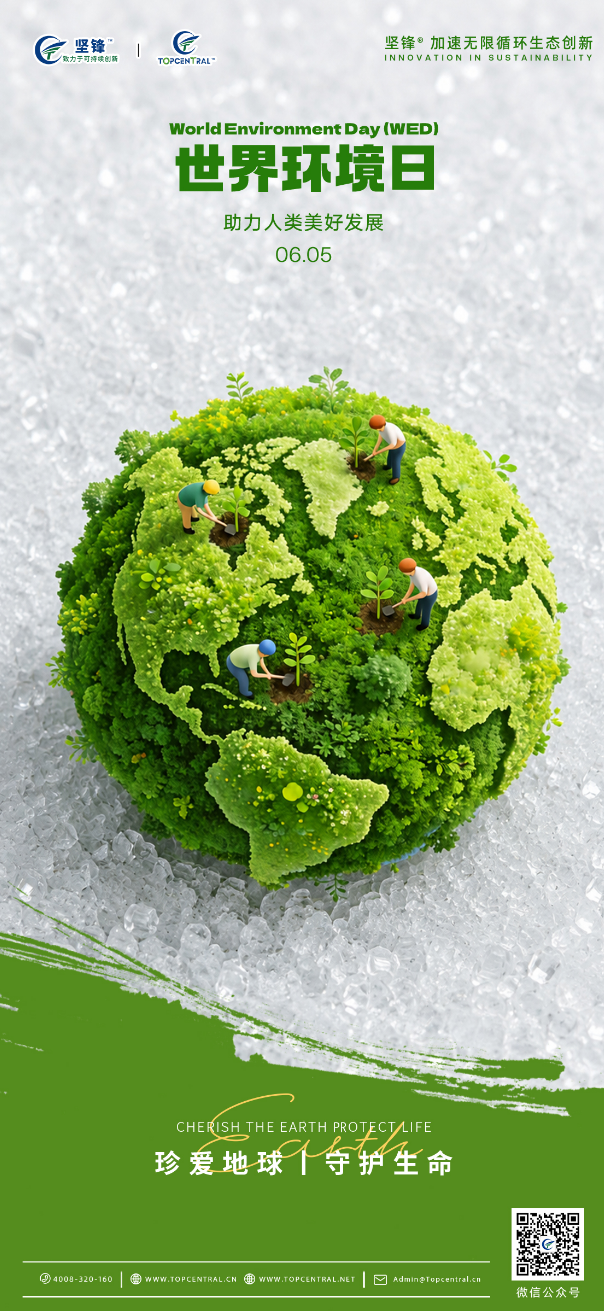
June 5 marks World Environment Day each year, a key global occasion for tackling plastic pollution and advancing low-carbon green development. Guided by the initiative Build a Beautiful China, Take Action First, the whole industry has reached a consensus to resolve resource depletion and ecological damage caused by waste plastic landfilling and incineration. Ningbo Topcentral New Materials Co., Ltd., a veteran player in recycled new materials, leverages advanced circular plastic technologies to roll out diverse practical circular solutions. Delivering tangible results across raw material recycling, eco-friendly manufacturing and industrial chain collaboration, the firm excels in resource circulation, ecological protection and sustainable growth.
The traditional linear plastic economy follows a fossil fuel cycle: oil extraction, virgin plastic production and eventual disposal, generating massive solid waste such as discarded water buckets, obsolete home appliance casings, worn fishing plastic gear and automotive plastic parts. Powered by four core technology platforms — Topcircle®, CircleBlend®, Bydercom® and ChemCircle® — Topcentral applies patented peer-to-peer circular processes to turn plastic scrap into high-value recycled feedstock.
Backed by 82 authorized patents and its role in drafting 7 national standards, the company has overcome technical barriers to mass-produce zero-carbon PCR-PC. Its full lineup of recycled materials holds three top international certifications: ISCC PLUS, GRS and UL2809. It supplies compliant low-carbon PCR materials to multiple Fortune 500 corporations worldwide, drastically cutting global crude oil consumption for plastic manufacturing.
As a National Specialized, Sophisticated, Unique and Innovative "Little Giant" enterprise, national high-tech firm and provincial-level green factory, Topcentral embeds environmental protection into production management and R&D talent development.
On the production floor, closed-loop wastewater and waste gas treatment systems operate across facilities. For instance, the IBISS® PCR ABS production line recycles plastic scrap while strictly controlling manufacturing wastewater. Qualified recycled pellets are used to produce small home appliance housings and cosmetic storage containers, lowering reliance on non-degradable virgin plastic at the source.
In R&D, multiple core researchers have been selected for Ningbo’s Leading and Top-notch Talent Program, with R&D staff accounting for 43% of total employees. The team has developed halogen-free flame retardant modification technology, enabling recycled plastics to reach UL94 V0 flame resistance grade. Recycled PC/ABS is widely adopted for chargers and router shells, reducing virgin plastic usage and boosting eco-safety for end products. The self-developed BesTrace® blockchain traceability system tracks the origin of every batch of recycled feedstock, blocking low-quality scrap and preventing secondary pollution from unstandardized recycled materials.
For the broader industrial chain, Topcentral partners with waste recyclers to standardize scattered plastic collection and storage. It processes hundreds of thousands of tons of industrial offcuts and post-consumer plastic waste annually, systematically mitigating soil and water contamination from improperly stockpiled solid waste.
True sustainability balances ecological, economic and social benefits. Topcentral has built a virtuous cycle where profitable operations fund further R&D, and upgraded technologies deliver stronger environmental outcomes.
Its recycled materials are widely adopted by global chemical giants across home appliances, automotive, new energy and daily chemical sectors. Steady revenue from green products continuously fuels technological innovation and environmental investment. Many brand partners rely on Topcentral’s PCR feedstock to secure full-lifecycle carbon neutrality certification and meet ESG green supply chain assessment criteria.
The Ocean Partner public welfare program complements industrial recycling by completing coastal recovery networks. Eco-stations in Chunhu of Fenghua, Xianxiang, Ninghai, Xiangshan and other coastal sites form a regional collection network. Fishermen trade abandoned floats and old fishing frames for carbon points, redeemable for eco-products like sun-protective apparel and electric toothbrushes made from marine recycled plastic.
Since launch, the 11 collection hubs in Ningbo and Zhoushan have gathered over 3,000 tons of marine plastic waste. Processed at Topcentral’s plants, the scrap is transformed into more than 20 types of consumer recycled goods. The project has been named a best practice for zero-waste cities and selected as one of China’s first official English case studies for national zero-waste urban development. It has received extensive coverage from domestic and international media including CCTV, China Environment News, Xinhua Net, CNR, Phoenix Network, Japan’s Kagaku Kogyo Shimbun and South Korea’s ChemLOCUS. Beyond marine protection, the initiative raises coastal fishermen’s incomes to deliver win-win outcomes for ecology and rural livelihoods.
In response to World Environment Day’s green call, Topcentral will further advance peer-to-peer circular technologies and expand application scenarios for recycled plastic. Through proven industrial circular models, it will curb white pollution and conserve fossil resources while popularizing plastic reduction and circular economy concepts. As a local enterprise taking solid action, Topcentral supports Beautiful China development and shares China’s practical circular solutions for global plastic sustainability governance.


